
E-Safety Tip - Understanding Image Filters and Their Impact on Children
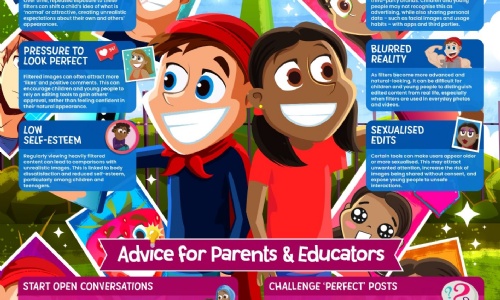
Image‑altering filters are now a normal part of everyday online life. From playful animal ears and colour effects to subtle tools that smooth skin or change facial features, these filters are built into many of the apps children and young people use daily.
While often fun and creative, they can also influence how young people see beauty, identity and what is “normal” online.
On social media platforms such as Snapchat, Instagram and TikTok, filters can quietly reshape appearance by brightening eyes, slimming faces or improving skin tone. Photo‑editing apps like FaceTune, BeautyPlus and VSCO go even further, allowing images to be heavily altered before they are shared.Over time, regularly seeing filtered content can blur the line between real and edited images, shaping expectations about how people should look.
For children and young people, this can lead to risks such as low self‑esteem, increased social pressure and comparison with unrealistic images. There are also concerns about hidden advertising, where filters subtly promote beauty standards, products or brands without being obvious. More serious issues can aged‑up appearances or content that feels more adult than appropriate, particularly when filters dramatically change how a young person looks.
This guide encourages parents and educators to support children by building media literacy—helping them understand how filters work and why people use them. Talking openly about edited images, celebrating real‑life diversity and encouraging confidence offline can all help young people develop healthier relationships with online content. With the right conversations and guidance, filters can be enjoyed creatively without defining self‑worth or reality.